
When God Was a Woman
WHEN ONE GOD IN TWO WAS A WOMAN
Our contemporary society was born from the encounter between Jerusalem and Athens, to which Arabia later contributed a new contingent of illuminism. Every individual living within our society is, regardless of personal practice or confession, the conscious or unconscious custodian of this historical breath. Since Antiquity, the destinies of East and West have never ceased to enrich one another, to intertwine, and at times, alas, to confront one another.
The practitioners of the three religions of the Book are designated under the generic expression “the sons of Abraham”, a Hebrew translation meaning father of nations. Yet this expression is not semantically neutral. Half of humanity appears to be curiously overlooked.
If words, grammar, language and the historical breath implicitly shape our conceptions and our vision of the world, an obvious question seems to arise: is monotheism intrinsically masculinising, does it inevitably give rise to spiritual, social and political structures, and to an administration of the sacred reserved exclusively for men?
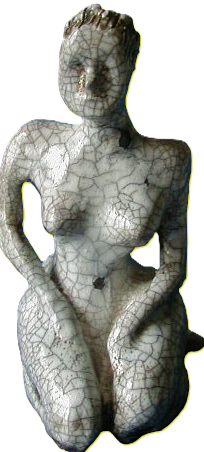
In order to attempt to answer this question, it is necessary to briefly recall the genesis of monotheism. Although rabbinic Judaism today is the direct heir of the oldest known monotheistic religion, Hebrew monotheism did not emerge ex nihilo, but asserted itself progressively. The Bible reports both the polytheistic practices of the ancient Hebrews and the coexistence of a single god alongside local gods. The Eternal Being, the most accomplished structure of Hebrew monotheism, assumed the metaphysical form accepted today following the Babylonian Exile. The clearest evidence of this coexistence and of the evolution of the concept remains the division of the Promised Land between the kingdoms of Israel and Judah, which according to the Bible was the consequence of the return of the Hebrews to idolatrous cults devoted to Baal and the goddess Astarte, two ancient Canaanite deities. (Judges 2:13, 2 Kings 17:9-18).
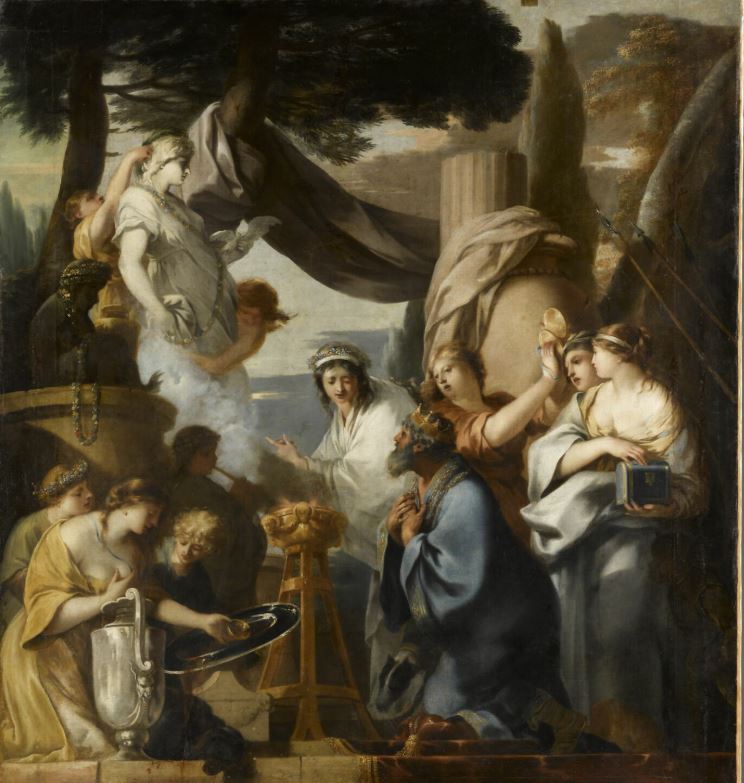
Solomon worshipping idols, Sébastien Bourdon, Louvre Museum
Two hermeneutical errors can lead to a fall from which it is difficult to recover: confusing the Bible with a cadastral register or with a history book. Consequently, the question of whether monotheism or polytheism preceded the other at the conceptual level is sterile for our reasoning. Evolutionism is no longer relevant in the study of comparative religions. More interesting, however, is the observation that Genesis presents a cosmogony expressing the will of a single, non-gendered god. The Bible postulates absolute monotheism as concomitant with creation (Gen. 1:1), and subsequently describes polytheistic practices predating the advent of the revelation of monotheism. Was this the case in reality? No one can affirm it with certainty.
What, then, were the earliest spiritual systems of humanity?
In the absence of written documents, we are left with conjecture, and only archaeological artefacts can come to our aid. During a period extending from 20,000 to 5,000 years before our era, divine representations are remarkably homogeneous and strictly feminine. In the Bronze Age, the young god associated with the goddess appears, both her offspring and her lover. From this observation emerged the thesis that a gynocracy, a golden age of women, preceded patriarchy. Later, as humanity came to understand the male generative role, it would first have modified the mythologies of polytheism to its own advantage, and monotheism would then have become the spiritual expression of patriarchy. This theory met with extraordinary resonance among modern feminist movements, to the point of recreating a cult of the goddess. The idea of a feminine divine within humanity revalorised the status of women. This ancient society would have known neither war, injustice nor a spirit of conquest, devoting itself primarily to the arts. The goddess embodied, for the societies of that period, the attributes of creativity, fertility and abundance, or chthonic characteristics linked to the infernal realm of the underworld. The elements supporting this thesis are mainly associated with the excavations at Çatal Höyük in present-day Turkey, a place of goddess worship, as well as with the work of the psychoanalyst Carl Gustav Jung.
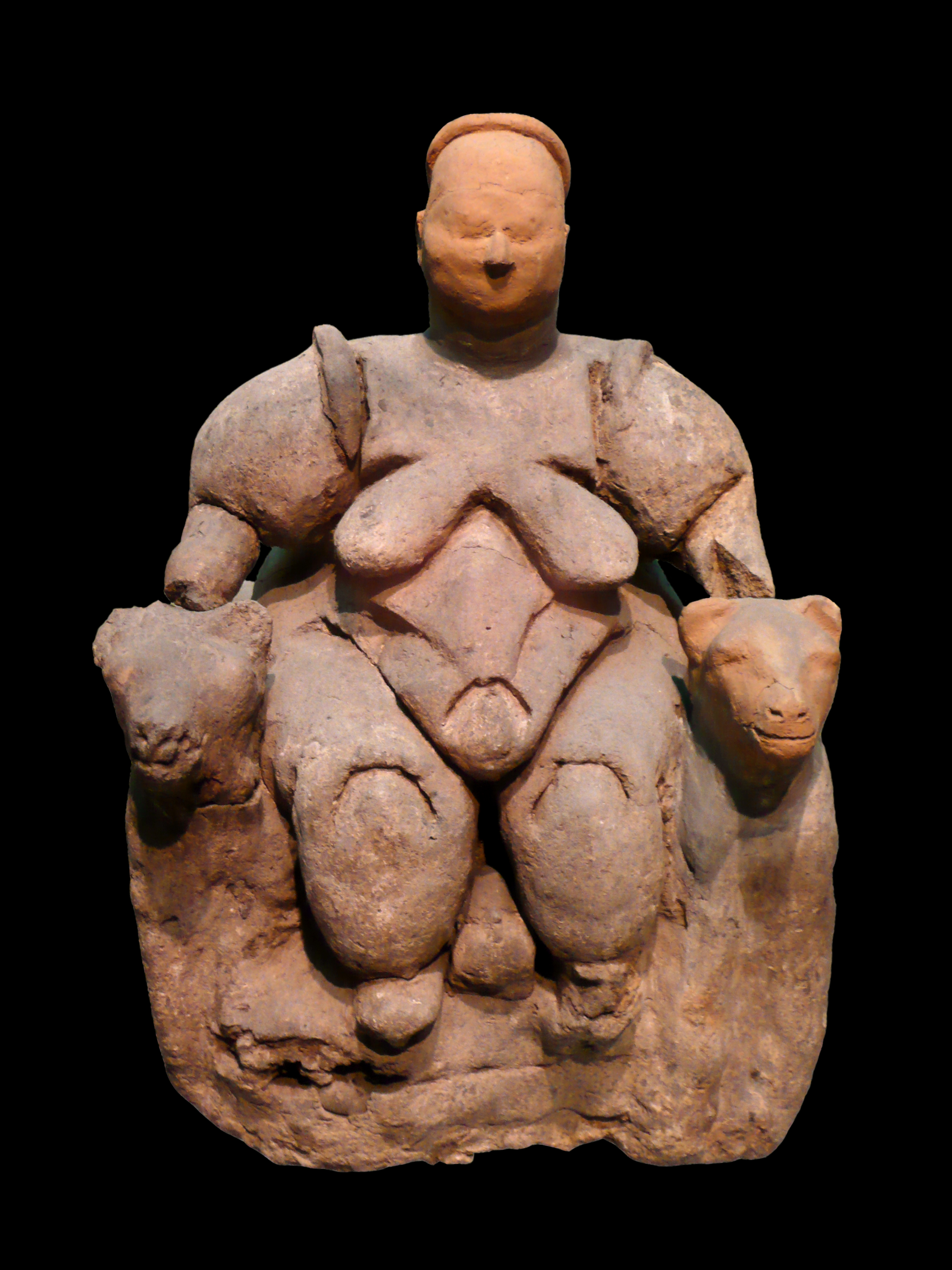
The society uncovered in Anatolia showed no fortifications and no representations of scenes of violence. Jung developed the same thesis by identifying the goddess with the symbol of maternity. He asserted that the goddess was an innate concept, the supernatural creatrix of the world, arguing that the primordial experience of every individual is intrauterine life. This experience would be reinforced after birth, since the mother nourishes her child. The child would then perceive the mother as a being of quasi-divine essence. The child would subsequently divide this concept into good and evil, in the form of a protective mother and a mother who punishes and sanctions. According to Jung, this interpretation would be the origin of the archetypes of benevolent goddesses and of the Gorgons (decorative heads of women with serpent hair). The theory of a feminine divine was defended by Robert Graves and more recently by Pepe Rodriguez in his controversial work Dios nacio mujer (God Was Born a Woman: The Invention of the Concept of God and the Subjugation of Women, Two Parallel Histories).
I myself subscribed to these ideas for a long time, only to arrive at the conclusion that, however seductive they may be, they now appear to me to be entirely erroneous, as they are false in terms of historical typology.
Greece, the second cultural cradle of our society, remained polytheistic until its adoption of Christianity. The status of women in Greece never experienced the slightest emancipation. The Greek woman, eternally a minor, was relegated to the gynaeceum and destined for the simple reproduction of the species. Yet their traditional background completely ignored absolute monotheism. The Indo-European root “deiw-os p’ter” evolved in Greek into Zeus Pater, in Sanskrit into dyaus pitar, and in Latin into Jupiter, thus indicating that the concept of god had already been masculinised before the Hebrews, a Semitic people of the East, proclaimed the concept of monotheism.
While it is quite possible that a matriarchy existed prior to the current patriarchy, there is nothing to indicate that monotheism was either the cause or the consequence of this societal transformation. The society in which monotheism emerged was already patriarchal. It is therefore perfectly natural that women do not occupy a position equivalent to that of men in the Bible. In a patriarchal society, the tribal chief embodied virtue and was required to ensure justice on earth. It thus seems logical that the covenant could only be affirmed in Genesis and Exodus through patriarchs or prophets who were overwhelmingly male, holders of temporal power from which women were excluded.
Do traces of an ancient cult of goddesses remain within modern Judaism? Raphael Patai raised this question in his work The Hebrew Goddess in the following terms: “It would be strange if the religion of the ancient Hebrews, which arose in a region of intensive goddess worship, had remained free of such a practice.” He would assert that the Shabbat ritual, welcoming the divine presence as a bride, constitutes such a trace. The pursuit of equality between men and women is a necessity, the exclusion of half of humanity from temporal and spiritual functions contravening the principle of the absolute unity of the Eternal Being. Yet the conceptions transmitted by the historical breath are tenacious.
The eighteenth and nineteenth centuries, marking the end of the wars of religion in Europe and the emancipation of religious minorities, philosophically raised the question of equality for all. The idea of a religion of humanity re-emerged, in the form of a praxis, whose principles were said to have been revealed through Noahism, in the form of a common morality, within which belief in a personal messianism lost its meaning. The idea was laudable, and Jews adhering to this thesis of a necessary rapprochement between religions had inscribed upon the Great Synagogue of Brussels: Have we not all one father? Malachi 2:10. Only a hermeneutical endeavour conducted upon the ontological, spiritual and ethical principles issuing from the Eternal Being will be capable of reversing this tendency towards masculinisation.
JEAN-MARC CAVALIER LACHGAR
Article published in the journal Maayan of the CJL
BIBLIOGRAPHY
• Pepe Rodriguez: Dios nacio mujer. Ediciones B., Barcelona, 2000
• Moses Maimonides: The Guide for the Perplexed (notably the symbolism of the Throne)
• Raphael Patai: The Hebrew Goddess, 3rd edition, Wayne State University Press, 1990
• Robert Graves: The White Goddess, Ed. du Rocher
• Colette de Bellay: Lilith ou l’un possible, Ed. Altess
• Anne Baring and Jules Crawford: The Myth of the Goddess: Evolution of an Image, Paperback edition, 1993